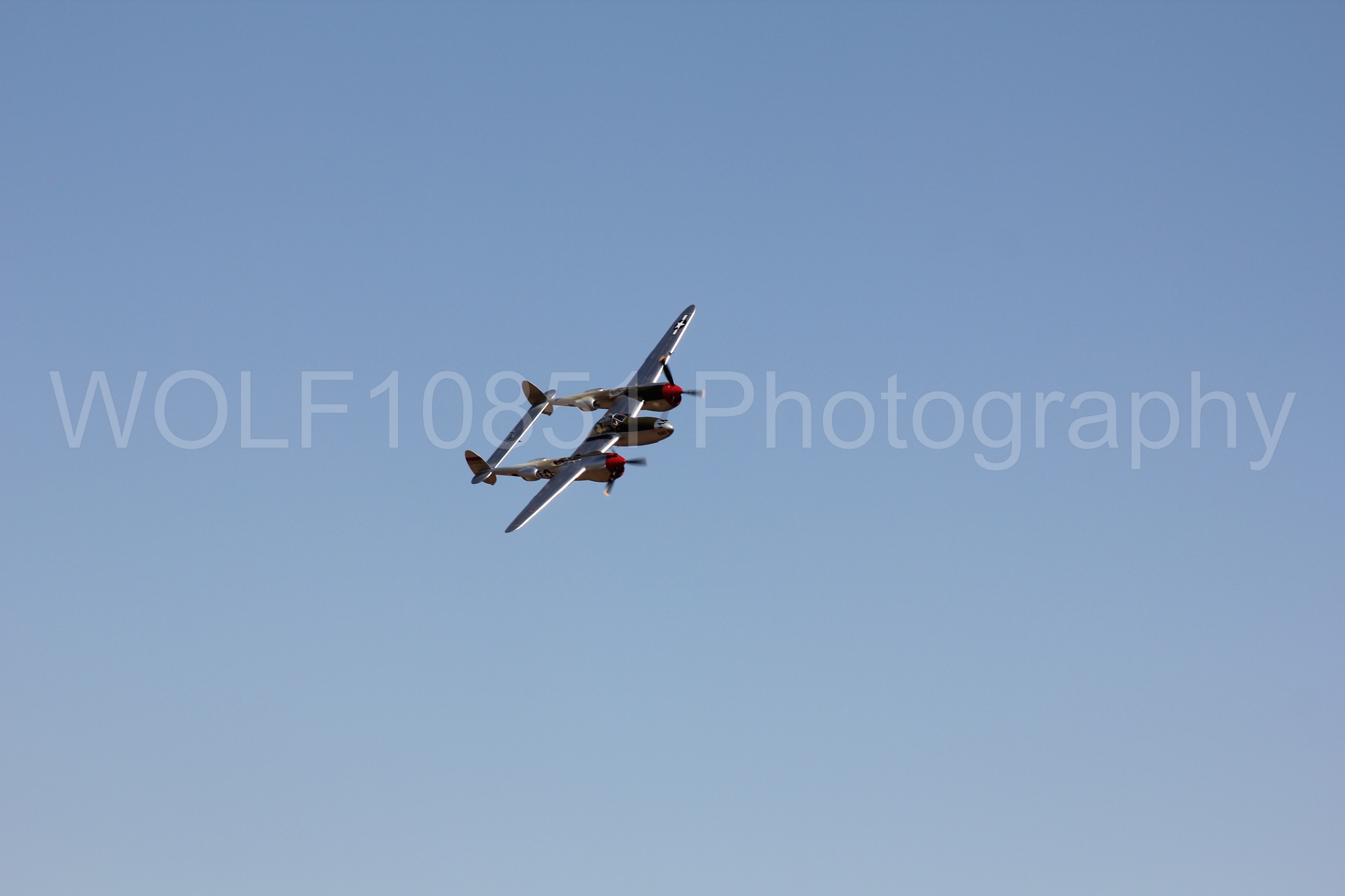
Most people see a P-38 and think fighter — twin Allison engines, tricycle gear, the distinctive twin-boom silhouette that enemy pilots in both the Pacific and European theaters learned to fear. Honey Bunny (44-26981) isn't a fighter. She's an F-5G, one of the photo reconnaissance variants that stripped the P-38's entire nose armament — the four .50 caliber machine guns and 20mm cannon — and replaced it with cameras. The reason for the 'F-5' designation was to confuse enemy intelligence about what the aircraft actually was.
The photo reconnaissance mission required a specific kind of courage. No guns, no wingman, no way to fight back if you were intercepted. The F-5 pilot's only defense was speed and altitude — the same Allison engines that made the P-38 a threat to enemy fighters now serving only to get the camera ship over the target and back out again before anyone could catch it. The photographs those pilots brought home made strategic bombing possible. Without current reconnaissance imagery, the planners bombing Germany and Japan were essentially working from memory and guesswork.
Honey Bunny was photographed in 2010 in her original F-5G reconnaissance markings and configuration — a variant of the Lightning that most airshow visitors never realize existed, and that most airshow photographers never specifically sought out. Those photos are historically significant now. The original reconnaissance livery is gone.