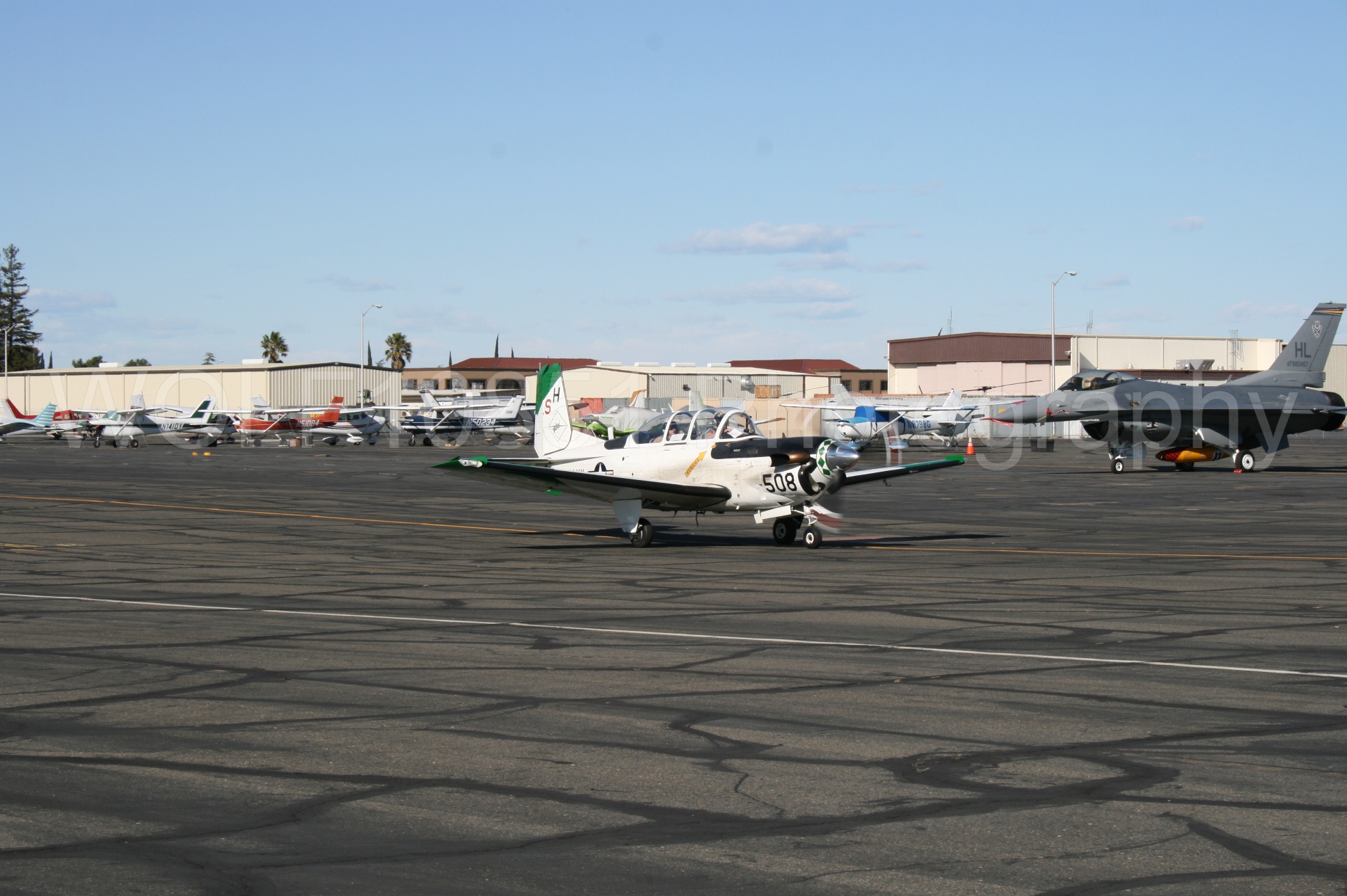
Before any Navy or Marine Corps aviator ever touched the controls of an F/A-18, a T-45, or a helicopter, almost all of them spent hundreds of hours in a yellow turboprop trainer at Naval Air Station Whiting Field in Florida or NAS Corpus Christi in Texas. That trainer was the Beechcraft T-34C Turbo Mentor — and for a generation of naval aviators, it was where flying became real.
Beechcraft developed the T-34C as a turboprop evolution of the original piston-driven T-34, entering U.S. Navy service in 1978. The key change was the engine: a Pratt & Whitney Canada PT6A-25 producing 715 shaft horsepower replaced the original piston powerplant, introducing student pilots to the turbine operations they would use for the rest of their careers. The pressurized tandem cockpit and genuine aerobatic capability meant students were learning on an aircraft that demanded real skill — not a docile primary trainer, but something with enough performance to find out quickly whether you had what it took.
The T-34C served as the Navy's primary undergraduate pilot training platform for decades, used by every aviator who went on to fly from carrier decks or Marine Corps airfields. It remains in service with numerous international operators. Those distinctive yellow aircraft circling the traffic patterns at Whiting Field represent an unbroken lineage — every generation of naval aviation flowing through the same basic airframe before going on to whatever came next.