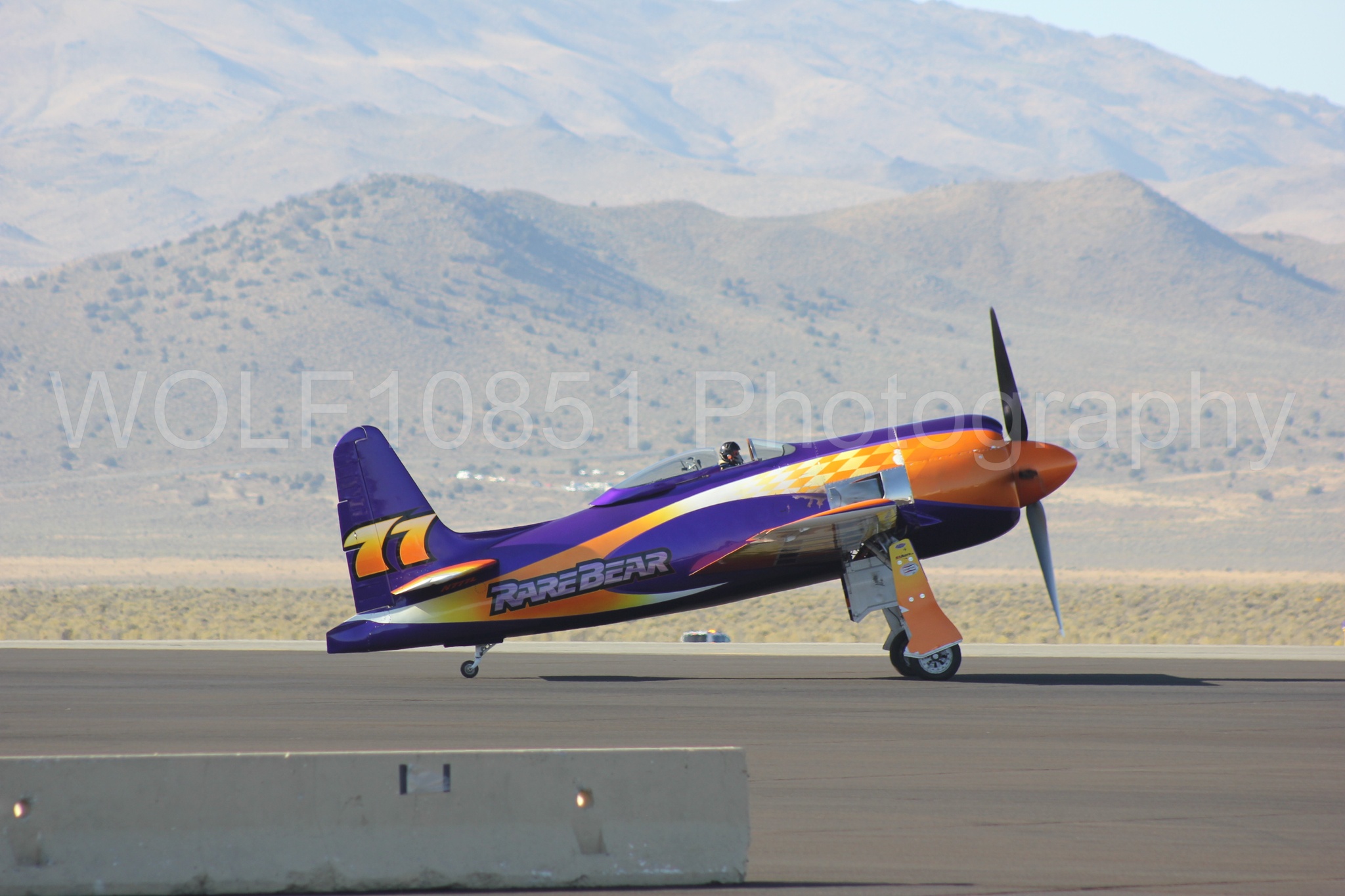
In 1968, during a TWA layover at Chicago O'Hare, airline pilot Lyle Shelton drove to Valparaiso, Indiana to look at a wrecked Bearcat. The airplane had cartwheeled on landing six years earlier and sat in a field since. The engine was gone. The wingtips were gone. The right landing gear, instruments, and cockpit controls were gone. Parts hunters had picked it nearly clean over six years. The owner was asking $2,500.
Shelton paid it.
What followed was years of scrounging parts that barely existed. Bearcats weren't being made anymore and the pool of flyable ones was tiny. He sourced a Wright R-3350 engine from a Douglas A-1 Skyraider. A propeller and cowl came from a Douglas DC-7 airliner. Landing gear fairings came from another damaged Bearcat. A rudder came from a man named Gunter Balz. The windshield came from warbird museum founder Ed Maloney. The first flight after the rebuild was September 13, 1969 — over a year of scavenging just to get it airworthy.
The Bearcat was designed at the end of World War II as the ultimate naval fighter — the smallest, lightest airframe that could be wrapped around the most powerful engine available. It was so fast and so agile that it was selected as the Blue Angels' second demonstration aircraft in 1946. Shelton understood what that airframe could become if you stopped worrying about keeping it stock.
He stopped worrying. The wings were clipped. The R-3350 from the Skyraider was replaced with an increasingly powerful series of engines pushing toward 4,500 horsepower. A custom low-profile canopy replaced the original. The dorsal fin came off. Everything that could be removed was removed. The airplane that came out the other end was barely recognizable as the Navy fighter it started as — but it was extraordinary.
Racing as 'Phoenix I' at first, then renamed Rare Bear, the aircraft began accumulating victories at Reno. The 1972 time-to-climb record: 3,000 meters in 91.9 seconds, breaking a record set by a stock Bearcat in 1946. Race wins at Cape May, Miami, Mojave, Hamilton, and Reno across the 1970s and 1980s. Then, on August 21, 1989, Rare Bear set the FAI-certified world speed record for piston-engined, propeller-driven aircraft: 528.33 mph. A $2,500 wreck. The fastest piston aircraft on earth. That record still stands.
The team ran on almost nothing for years — selling T-shirts and vials of used engine oil marketed as 'Bear Blood' to keep racing. Rod Lewis bought the aircraft in 2006 for just under $2 million. The 2011 Galloping Ghost crash ended the Reno Air Races permanently. Rare Bear is now stored in Texas, its racing career over, its record untouched.